
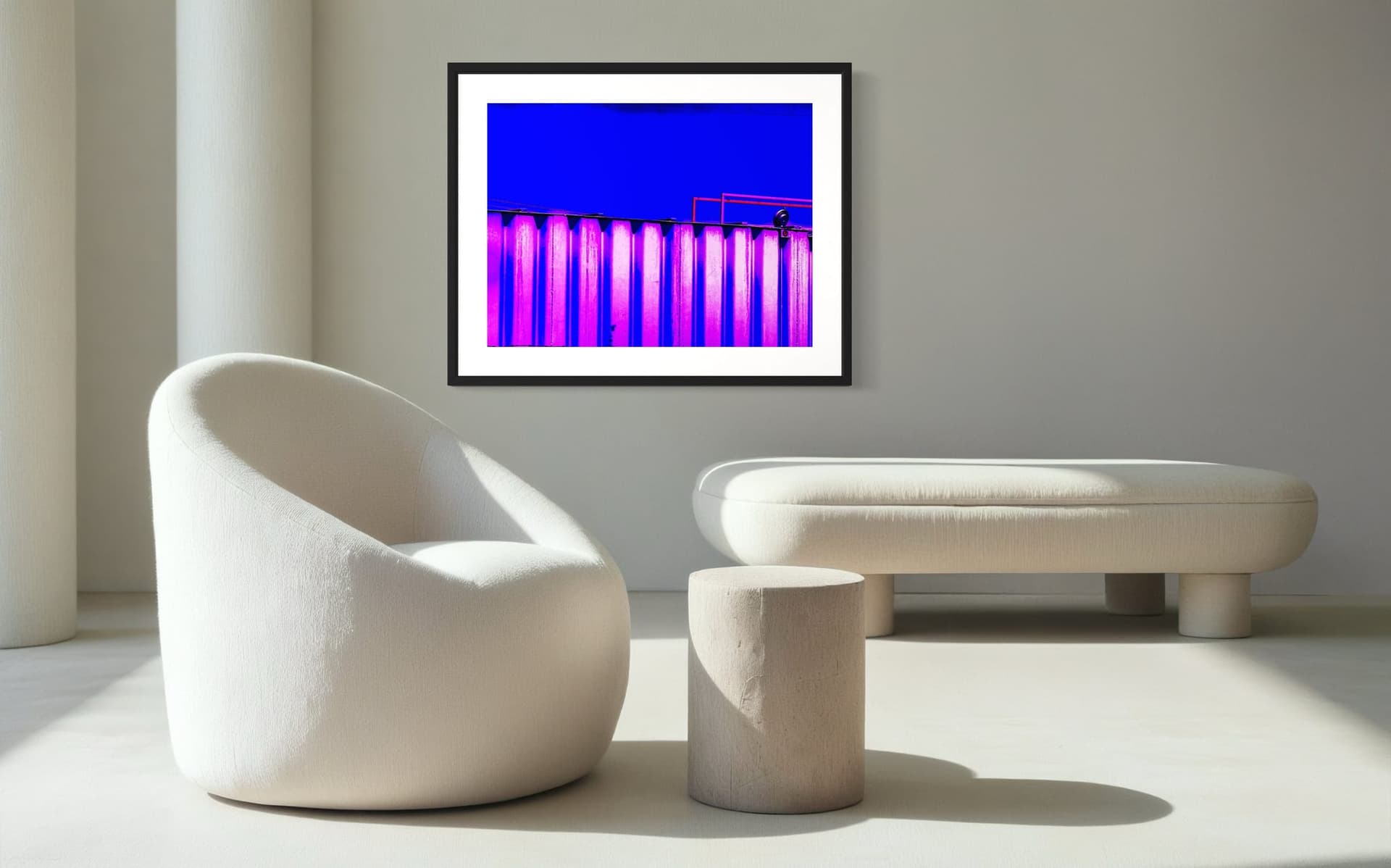
Original artwork, photograph by Barbara Jacobs | Large archival pigmented print on paper. Generally, when positioning paintings in your living space, consider the placement of your furniture to make your artwork an integral part of a three-dimensional space.
Renowned color consultant and lifelong artist Barbara Jacobs offers valuable insights on incorporating art into your living spaces. Drawing from her extensive experience in color design and her artistic upbringing, Jacobs shares tips on selecting, placing, and coordinating artwork to create a vibrant and cohesive environment. Whether you’re considering original pieces, limited editions, or curated prints, Barbara’s expertise will inspire you to make 2025 an artful year.
Barbara’s journey as an artist began early, influenced by her father, an artist himself, who instilled in her a deep appreciation for the transformative power of original artwork. Today, as a trusted advisor to her clients, Barbara often helps them with decisions beyond color, including selecting furnishings and sourcing artwork.
Selecting Original Artwork: Is It Essential?
Barbara Jacobs emphasizes the transformative power of original artwork. She explains that owning even a single piece can infuse your daily life with inspiration, energy, and lasting memories. While original artwork is often associated with high costs, Jacobs reassures us that beauty and value don’t have to break the bank.
“Go with what you love…what speaks to your heart,” says Jacobs. Art fairs and open studio events are excellent starting places for discovering affordable, unique works and meeting the artists who create them. Galleries, while often exceptional, are not the only avenue for acquiring art. Virtual galleries and email lists also provide opportunities to connect with artists and learn about their creative processes.
SUBSCRIBE TO THE HAVEN MAILING LIST
Curated homes, market intelligence and design stories — a few emails a month.
No spam. Unsubscribe any time.
The Advantages of Original Artwork
Owning original art ensures that you have a one-of-a-kind piece, whether from an artist you’ve followed for years or a recent discovery. Beyond monetary value, the pride of showcasing a unique creation enhances your home’s ambiance. For collectors with an eye on investment, original pieces also hold enduring appeal.
Limited Editions: Affordable Alternatives
When original artwork is not an option, limited editions offer a compelling alternative in a range of styles and price points. Limited-edition prints are typically produced using high-quality materials like pigmented archival paper, canvas, or metal, enhancing their visual impact and durability. Jacobs highlights the importance of lower-numbered editions, such as 2/20 (meaning that the piece is the second one made out of a total of 20), ensuring exclusivity while remaining accessible. Barbara explains her take on this: “I personally set the limit for edition size at 20. You know that there will never be more than 19 other people anywhere who will own the exact same art as you have in your own hands.”
Some art, such as digital works, may not exist in a traditional physical form. In these cases, the only way to make them tangible is through printing. Artists often offer such prints in various sizes, allowing collectors to choose formats that best suit their spaces.
If you’re considering original fine art prints, Barbara advises looking for etchings, lithographs, silkscreens, and similar works that are typically marked with edition numbers or the designation “A/P” (Artist’s Proof). Artist’s proofs represent unique pieces created during the development phase of a work and are highly valued by collectors.
Creating fine art prints involves meticulous craftsmanship, with many requiring separate “pulls” through the press for each color. This intricate process demands exceptional skill, which adds to the cost and artistic value. Barbara highlights that renowned artists often have experienced and talented studio assistants who help with these labor-intensive tasks.
For collectors seeking even rarer pieces, monotypes or monoprints—classified as 1/1 works—offer a unique opportunity to own a one-of-a-kind piece. Although created through printmaking processes, these are originals rather than reproductions and are available in a wide budget range.
No Frame? No Problem!
Shown below, hanging on an actual wall, is Barbara’s favorite elegant, no-frame/no-glass mounting system, as used with one of her archival prints, “Conversations with Color: Seasons/Fall.” This system is an ideal and economical solution for hanging your new artwork on paper right away, while you have time to consider the actual frame type you might want to use.
Note that this print is numbered as 1/20, meaning it’s the first print in a limited edition of 20. Subsequent prints of this piece will start at 2/20.

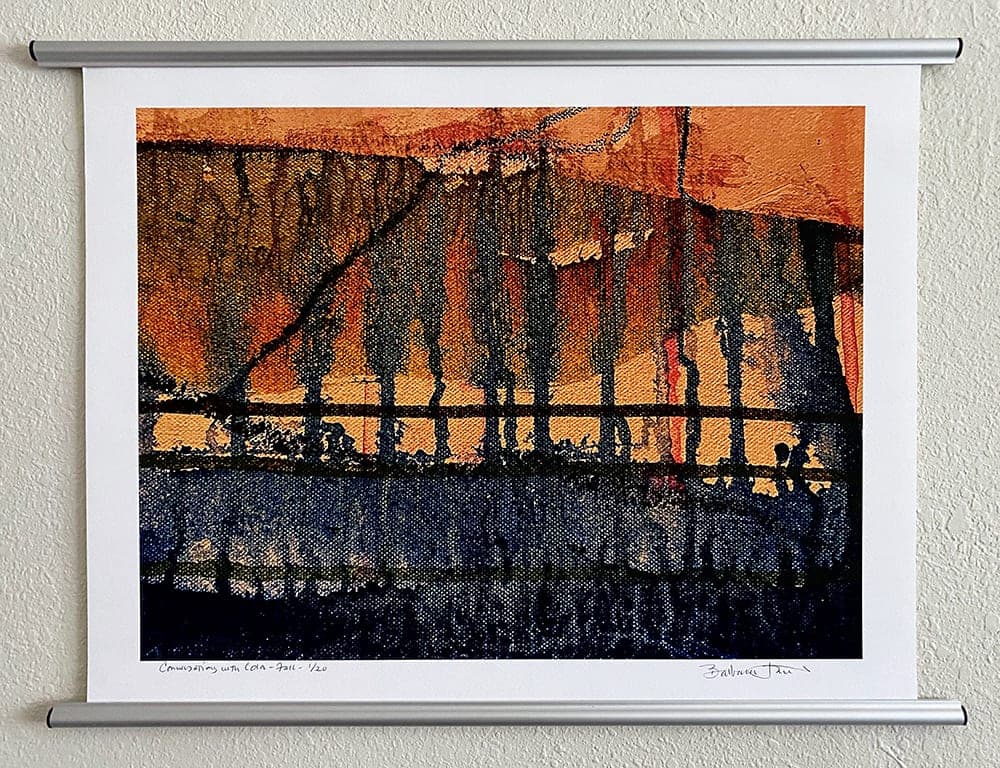
Conversations with Color Series – Conversations with Color – Seasons/Fall – Shown hanging on a wall. This version: printed on paper. Also can be made printed on canvas or metal. Note: because the original of this print image was actually painted on canvas, it would look beautiful printed on canvas!
These beautiful display rods come in a few colors, and in many sizes, from short to very long. You can order the rods yourself from PosterHanger.com, a company and product Barbara admires and recommends.
Affordable Art Options: Open Edition Prints
For informal spaces or those seeking economical options, open edition prints provide a more accessible way to enjoy art. Unlike limited editions, these works can be reproduced endlessly, making them ideal for areas like children’s rooms, dorms, or casual living spaces and commercial or hospitality areas. Available in standard poster sizes like 18” x 24” or 24” x 36,” they are easy to frame and swap out as desired. Barbara recommends choosing prints on substantial paper for better quality and longevity. You’ll often find high quality fine-art reproductions made in this way.
Coordinate Your Interior House Colors With New or Existing Artwork
Barbara offers practical tips for harmonizing artwork with your home’s color palette:
Distill Colors: Stand back and squint at the artwork to see its general color scheme. Use this as a guide when selecting paint swatches.
Use a Background Color: Choose a deeper wall color to frame and emphasize the artwork.
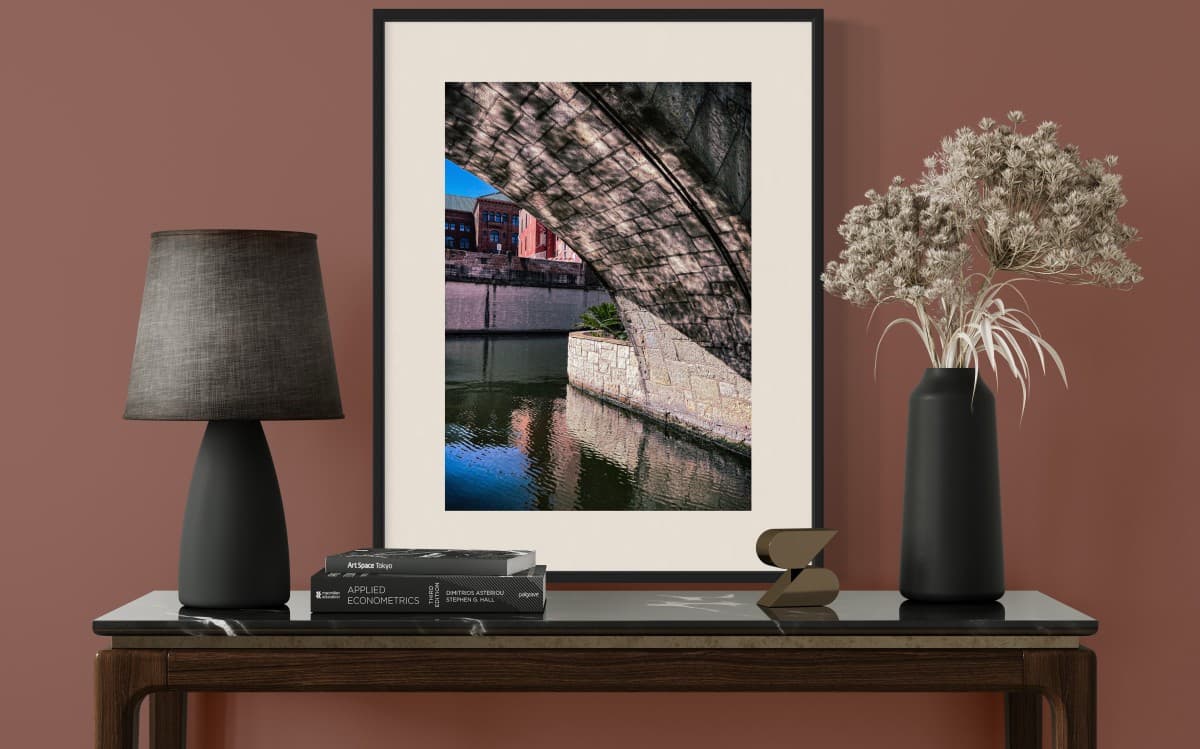
All artwork by Barbara Jacobs | This picture is on the larger side for this space, but it can still work. In a situation like this, you can hang the painting on the wall, or simply lean it against the wall, resting the table top.
Highlight Favorite Colors: Select a few hues from the piece to integrate into your home’s decor. If you’re considering an “accent wall,” this is a good way to make it an expanded frame for the artwork.
Consider Neutral Walls: For non-accent walls, also think of your entire space as a backdrop that complements the artwork rather than competing with it.
Extending Coordination to Exterior House Colors
Barbara notes that a home’s exterior colors often naturally relate to its interior features. By consulting a professional color expert, homeowners can create cohesive connections between paint, roofing, landscaping, and hardscaping to achieve a seamless indoor-outdoor experience.
Placement Tips for Artwork
Barbara provides detailed recommendations for placing different types of artwork:
Larger Pieces: Use them as focal points in spaces such as at the end of a hallway, above fireplaces, or in rooms with tall ceilings. Ensure they are positioned at eye level for maximum impact.

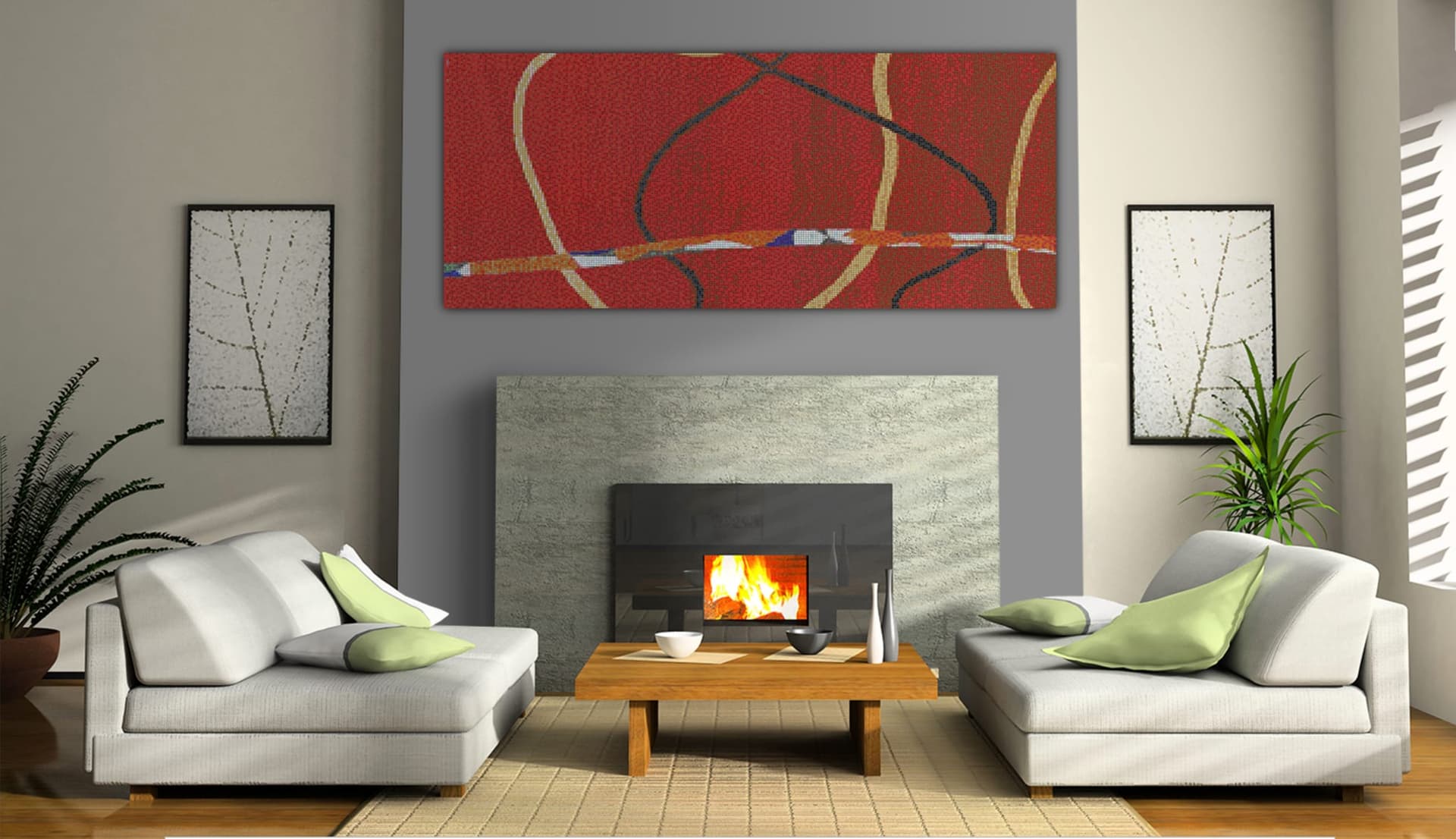
All artwork by Barbara Jacobs | Larger-scale custom-sized original design, MOSAIC installation.
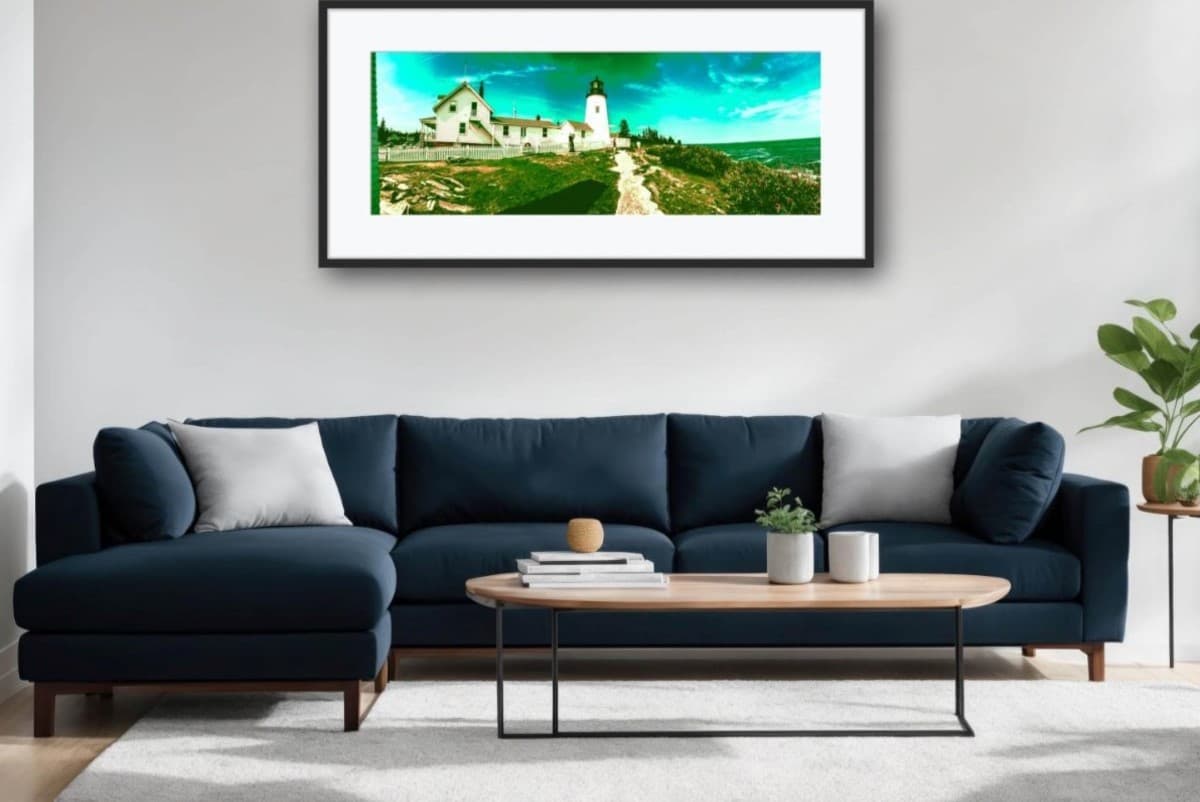
All artwork by Barbara Jacobs | This horizontal Maine landscape is a complement to the horizontal sofa and table shapes.
Smaller 2D Pieces: Arrange them in groups along hallway walls. You can space them evenly with less than two inches between pieces or distribute them with up to six inches between each. Another option is to organize them in horizontal or vertical groups of three, keeping minimal space between the pieces, with the center piece positioned at eye level for balance.
3D Wall Art or Sculptures: Consult the artist for advice on mounting methods and display stands for both security and aesthetic purposes. For free-standing sculptures, ensure the stand is larger than the artwork’s base and that there’s enough space to view the piece from all angles—and ideally from all sides!
Textiles and Mixed-Material Wall Hangings: Tapestries and textile/mixed-media artworks often require specific mounting and hanging techniques, so it’s helpful to consult with the artist for guidance or assistance with installation. For placement, ensure the artwork is visible from a distance for maximum impact, while also being close enough to appreciate its details and textures.
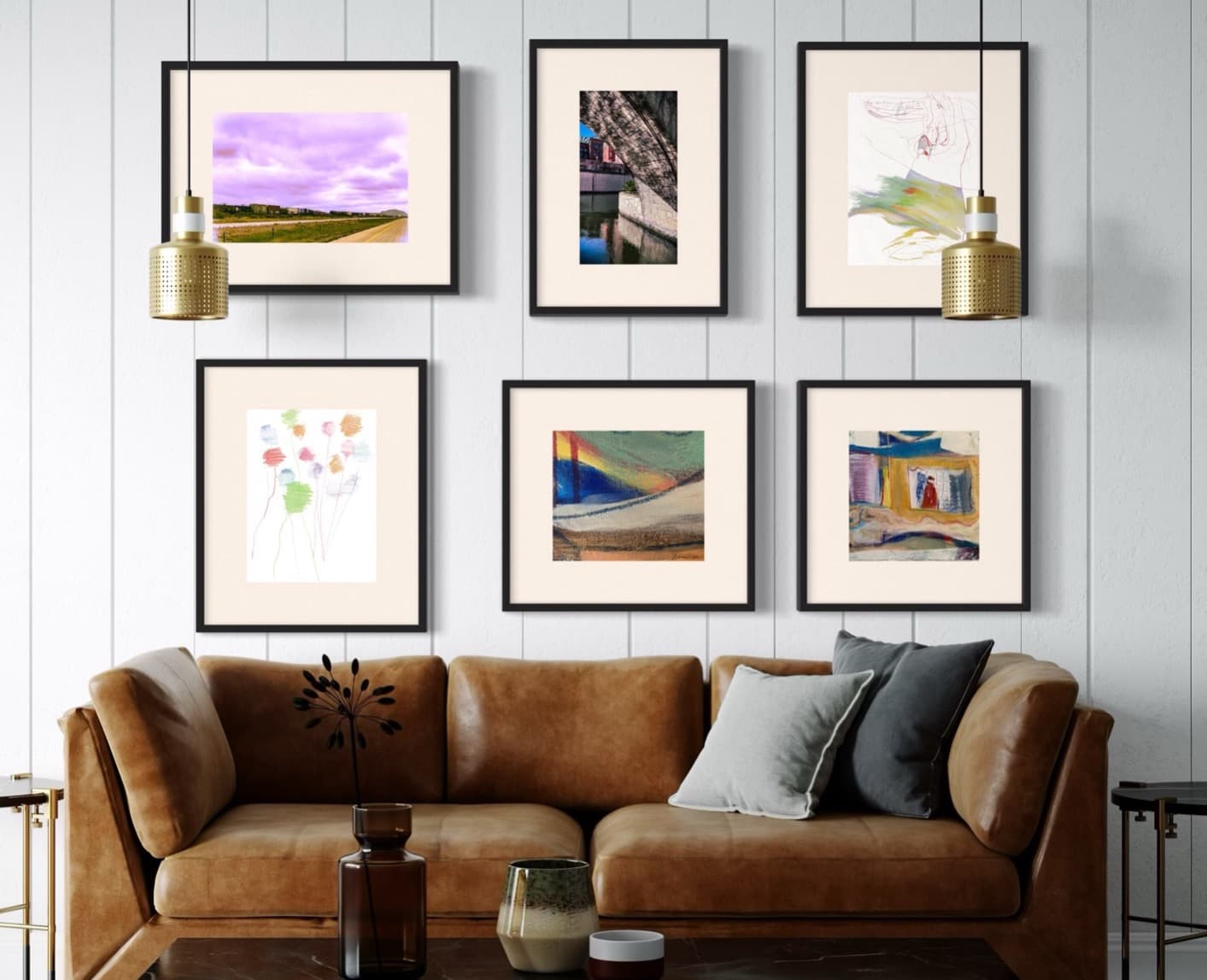
All artwork by Barbara Jacobs
Why Are “Gallery Walls” Popular?
Think of it as your own art gallery where the artworks are selected—by you, the curator—from many artists and sources. Start with three pieces. You can even add new pieces as you find them and rearrange as needed. Take a look at some ideas on gallery walls below:
– They can conform to and enhance any wall size or shape
– They are ideal for smaller walls or spaces.
– They present an alternative to trying to hang a piece on every wall. Barbara says she prefers this method because she has a variety of work she loves to see, and it’s more convenient than featuring art on every wall.
– On a gallery wall, you can include a mix of art styles and colors you love:
– Select the work by style and color, or mix them up
– Landscape, botanicals, abstract, portraits, graphics and typography…textiles, collages, even 3D wall pieces
– They can exhibit a wide range of artwork together, from small to large in size.
– You can densely arrange a mixed group of sizes on a partial wall, a full-wall or even “floor to ceiling'” style. This kind of exhibiting is historically called “salon style.”
Basic Art-Hanging Tips
– View as center alignment
– View as top or bottom edge alignment
– Set up small pieces of equal size in a square or linear arrangement
– Surround a small piece with larger items
– Center smaller pieces above-and-below larger
– Think “balance” so you have a visually interesting distribution of small, medium and larger works that are square, horizontal, or vertical.
– Consider how your eye is led from one piece to another around the space. Make it an interesting voyage.
Mainly, Barbara suggests that you just play with the arrangements and feel free to do something that might seem “different” to what you have seen elsewhere. Experiment!
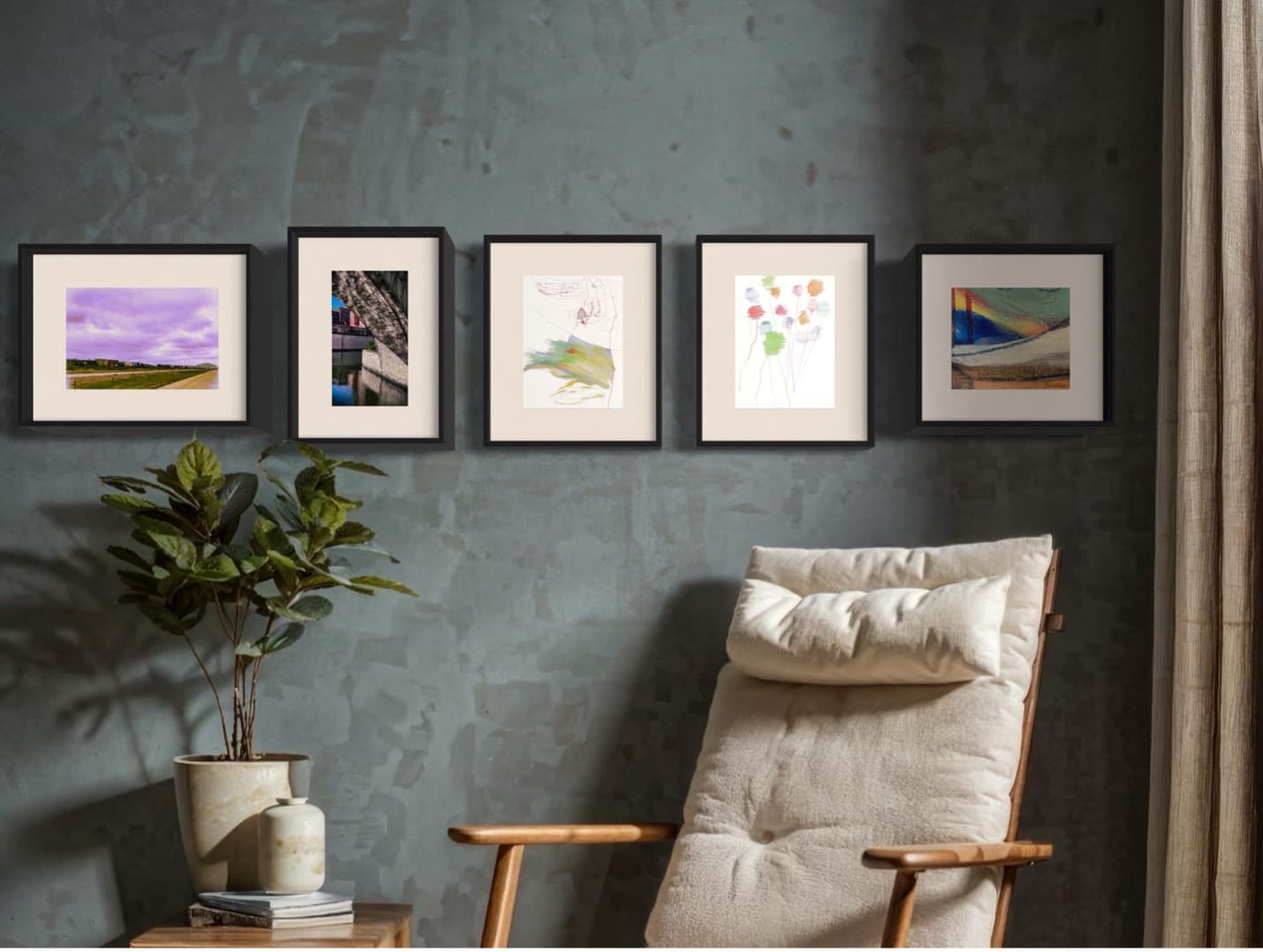
All artwork by Barbara Jacobs | Some of the same pieces as shown elsewhere in this article, in a different context and display style.
“Salon Style” Grouping Work of Different Sizes, Styles, and Presentations
Consider a vibrant collection of various types of work. You can change them up from time to time, also. Often a deep color wall will provide a dramatic and enjoyable foundation to support this collection.
Historically, this type of artwork display has even been a floor-to-ceiling kind of arrangement both in galleries and private homes.


All artwork by Barbara Jacobs | In this example, the large “pine needles” shape is an archival photograph printed on metal! Note how the far right framed piece is almost “tucked into“ the pine needles image.
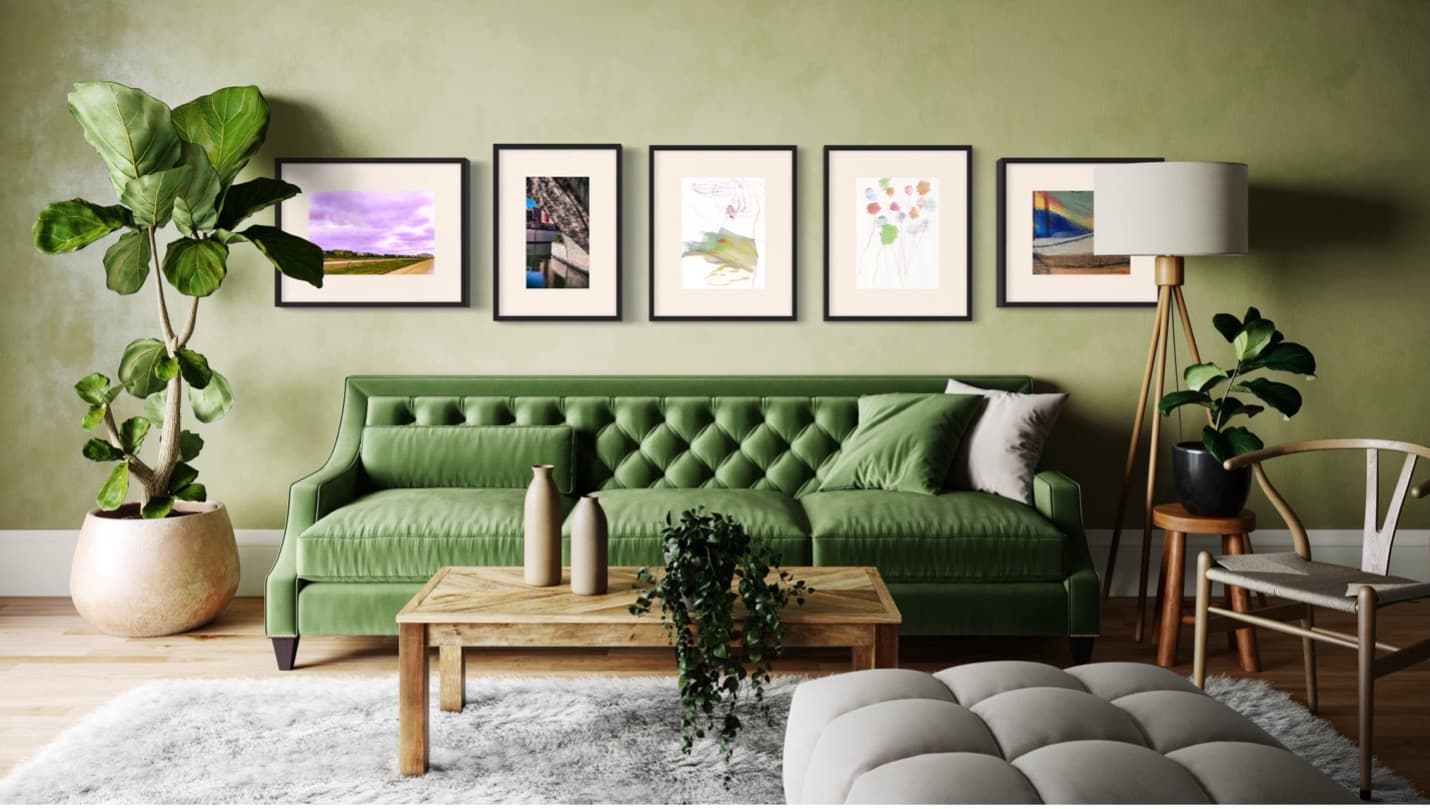
All artwork by Barbara Jacobs | Consider this group, shown with horizontal shapes on either end, and the three vertical shapes between them. Another way, creating a slightly different feeling for the viewers, would be to place the narrower, darker image in the actual center between the two lighter, colored-pencil drawings.

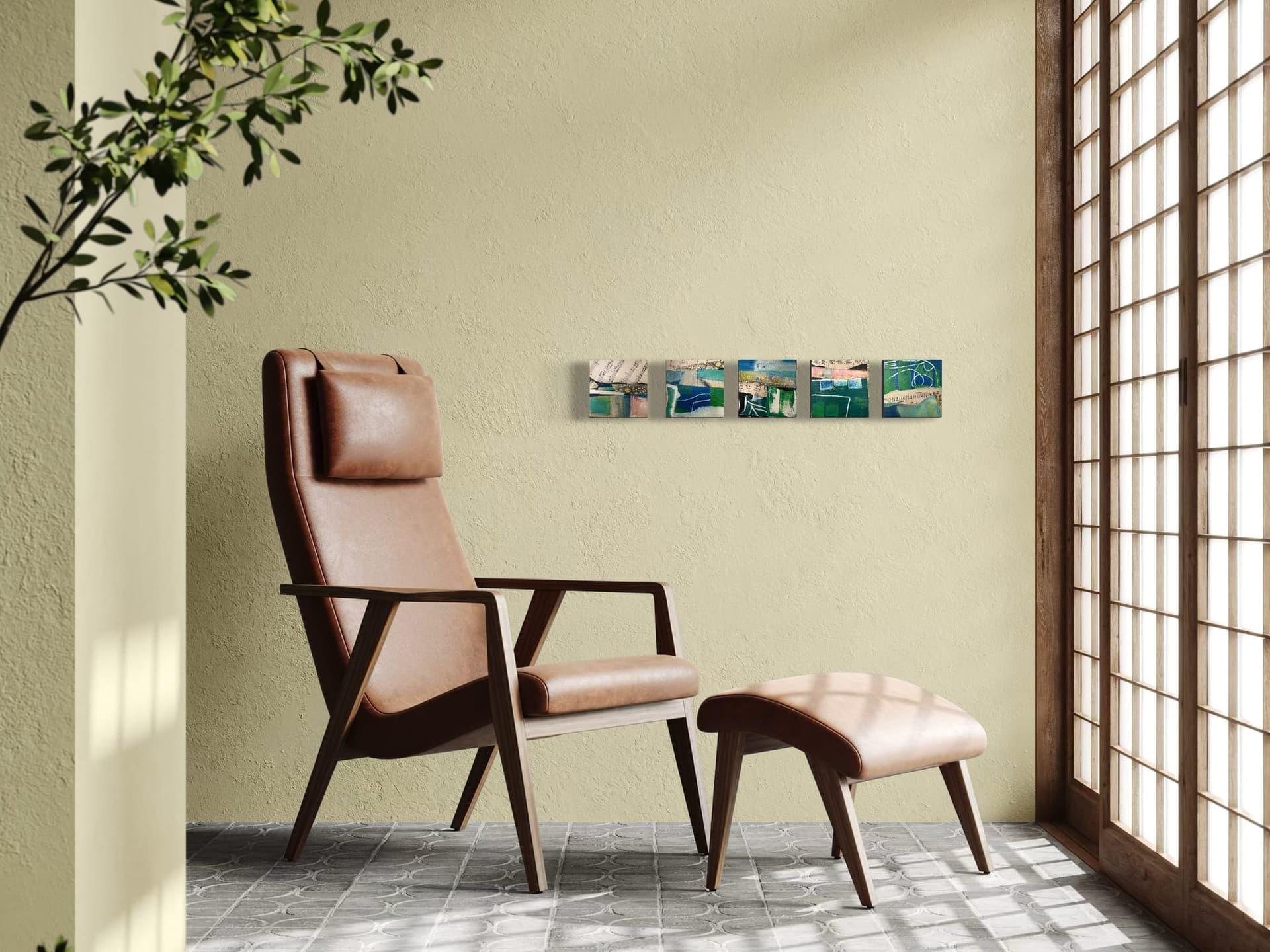
All artwork by Barbara Jacobs | A smaller-scale group works well in this focal area, a bit lower down on the wall. The entire series of 5”x5” paintings is right in your field of vision when seated in the armchair.


All artwork by Barbara Jacobs | Visual texture and the unusual shape of this archival print on metal brings bright contrast and drama to this unique bedroom space.

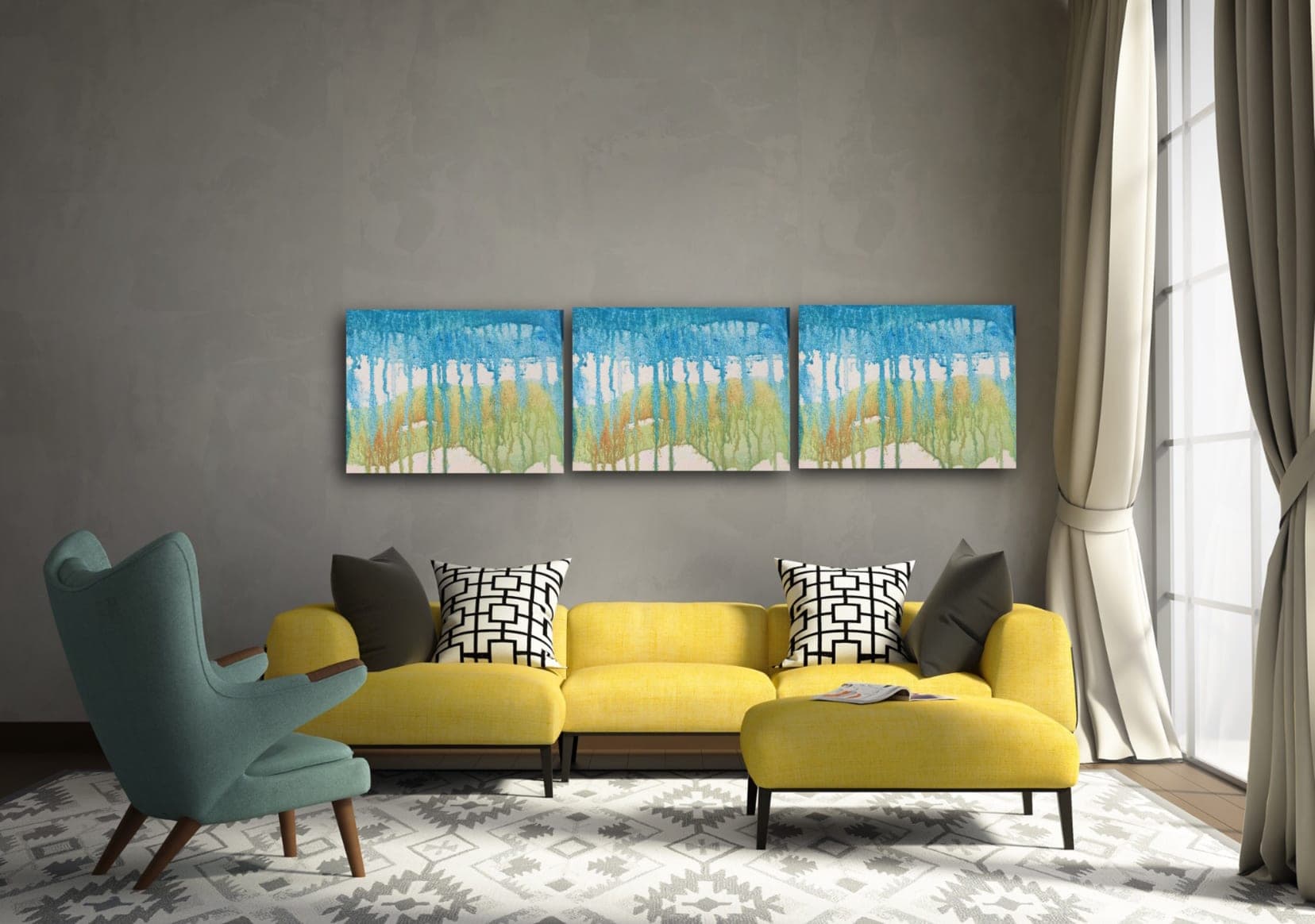
All artwork by Barbara Jacobs | Three archival prints of the same watercolor make a visually interesting yet rhythmically soothing group.
Begin Transforming Your Home
With Barbara’s tips and insights, you can start 2025 by transforming your home into a vibrant, art-filled sanctuary. She reminds us: “Ultimately, it’s just really about what you love and where you want to see and enjoy it.”
For more content like this, read Barbara’s newest blog post: “If Your Walls Could Talk…!”