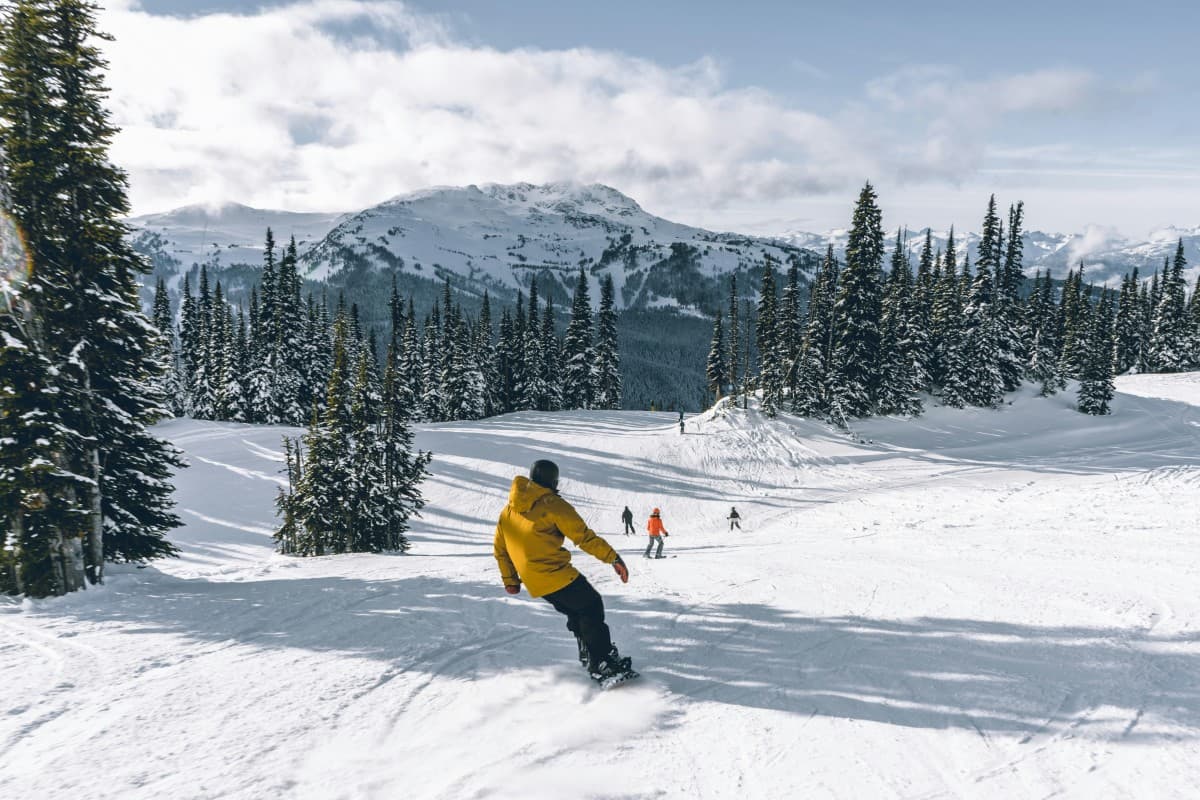
Whistler, BC
British Columbia’s mountain markets are heading into fall with noticeably different conditions depending on the destination. According to the British Columbia Real Estate Association, province-wide home sales fell 6.7% year over year in July, while the average residential price declined 1.3%. Several mountain markets, however, are entering fall with stronger activity or particularly limited supply.
Whistler remains constrained by limited supply
Whistler has seen relatively little overall change from last year. According to the Whistler Real Estate Company’s Q2 2026 report, sales through the first half of the year were down 7% from the same period in 2025, while listing inventory at the end of June was also down 7%. Chalet inventory declined more sharply, falling 17%.
The company also reported an increase in prospective-buyer inquiries and property tours during the summer. With fewer properties available than a year ago, that activity could carry into fall as buyers look ahead to ski season.
SUBSCRIBE TO THE HAVEN MAILING LIST
Curated homes, market intelligence and design stories — a few emails a month.
No spam. Unsubscribe any time.
Big White shows strength, but not across every property type
Big White recorded 19 sales during the second quarter, its strongest Q2 since 2022, according to Big White Living’s Q2 market report. The average sale price increased 14.8% year over year to approximately $732,000, although the report attributes much of that increase to the types of properties sold rather than broad price appreciation.
Townhouses were the strongest segment, accounting for 10 of the quarter’s 19 transactions, while condominium sales fell 30% year over year to seven. Heading into fall, the difference between those two segments will be worth watching as ski-season buyers return to the market.
The Kootenays move against the provincial trend
The Kootenay and Boundary region recorded stronger July sales even as activity declined across British Columbia. According to the Association of Interior REALTORS®, 318 homes sold in July, up 2.6% year over year, while active inventory increased 8.2%.
Prices also varied significantly by property type. The single-family benchmark rose 5% to $640,700 and the condominium benchmark increased 11.1% to $346,500, while the townhouse benchmark declined 4.6% to $509,400. For mountain communities across the region, the additional inventory gives buyers more selection heading into fall even as several property types continue to post annual price gains.
A strong El Niño is developing ahead of ski season
The 2026–27 ski season is approaching with El Niño strengthening considerably. In its August 13 update, NOAA’s Climate Prediction Center put the probability of a very strong El Niño during the Northern Hemisphere fall and winter at greater than 90%. The outlook does not determine snowfall at individual British Columbia resorts, where elevation, storm tracks, temperatures, and local conditions will remain important.
Resorts are already setting their winter calendars. Sun Peaks Resort lists November 21 as its scheduled opening date, while Big White Ski Resort is targeting November 26. Revelstoke Mountain Resort currently lists early-season lift-ticket dates beginning November 28.
For the housing market, fall will show whether approaching ski season translates into stronger demand. Whistler enters with constrained inventory, Big White with a pronounced divide between property types, and the Kootenays with sales running ahead of last summer even as more homes become available.