Luxury homes are often defined by their architecture, location, and square footage. Yet what truly distinguishes a high-end residence from an ordinary one is the interior environment. Thoughtful design choices transform beautiful properties into memorable living spaces that reflect sophistication, comfort, and personality.
In luxury real estate, buyers and homeowners increasingly look beyond basic finishes. They want interiors that feel curated rather than simply decorated. From statement art pieces to carefully selected materials, the smallest design decisions can dramatically influence how a space is perceived.
The following interior design elements consistently appear in refined homes and upscale properties. When used thoughtfully, they add depth, character, and visual interest while reinforcing a sense of quality throughout the home.
Statement Wall Art as a Focal Point
One of the quickest ways to transform a luxury interior is through statement wall art. Large-scale artwork acts as a focal point that immediately draws attention when someone enters a room.
Unlike small decorative pieces, statement art anchors a space. It introduces color, texture, and personality while helping to balance furniture and architectural features.
Designers often place statement pieces in key areas such as:
- Above a fireplace
- Behind a sofa or bed
- Along a main hallway
- In a double-height entryway
High-end homes frequently favor oversized pieces or curated gallery walls that feel intentional rather than cluttered. Selecting art that complements the room’s palette and materials keeps the look cohesive.
A growing number of designers and homeowners turn to specialized art brands such as The GOAT Wall Art when searching for striking, conversation-starting pieces that fit modern luxury interiors. They often browse curated collections at https://thegoatwallart.com/ for pieces that complement modern luxury spaces.
SUBSCRIBE TO THE HAVEN MAILING LIST
Curated homes, market intelligence and design stories — a few emails a month.
No spam. Unsubscribe any time.
High-Quality Natural Materials
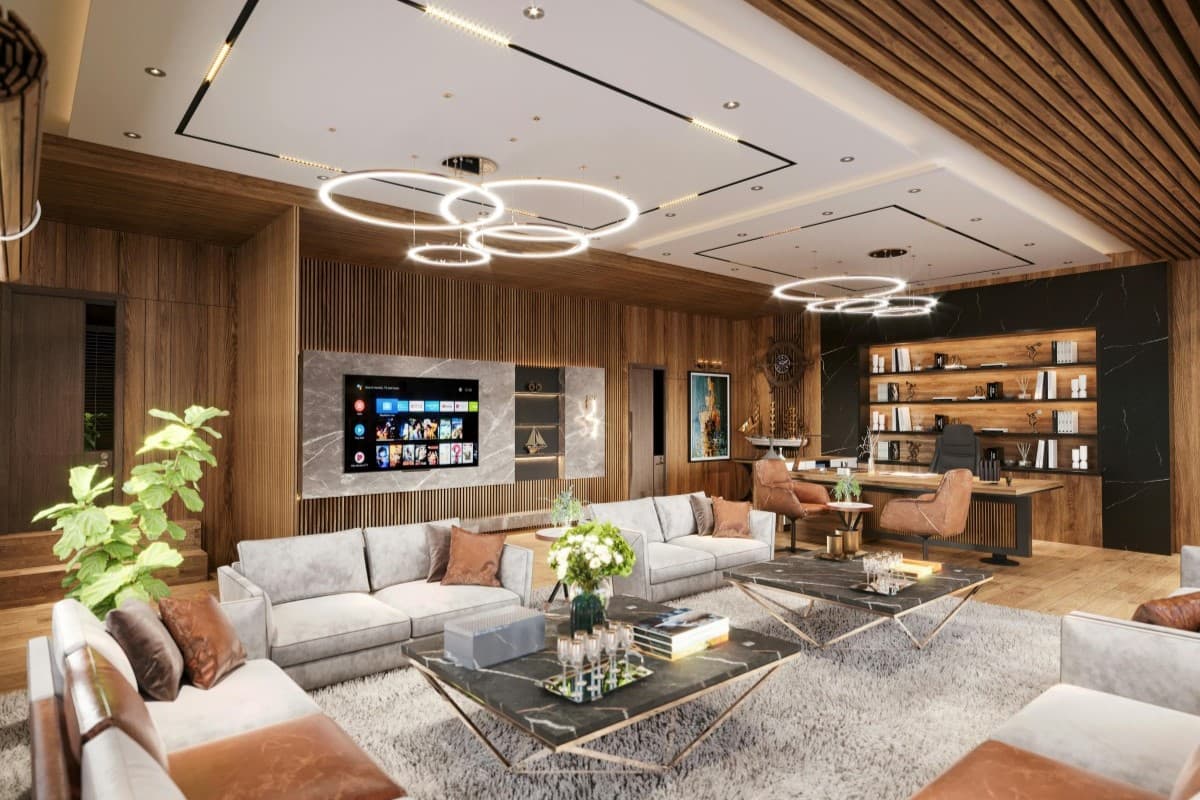
Luxury interiors almost always feature natural materials. Stone, hardwood, marble, and metals introduce texture and authenticity that synthetic finishes struggle to replicate.
These materials age well and add depth to a room through their natural variations. A slab of marble, for example, carries unique veining that becomes a design feature rather than just a surface.
Common natural materials used in luxury homes include:
- Marble or quartzite countertops
- Wide-plank hardwood flooring
- Natural stone fireplaces
- Solid wood cabinetry
- Metal accents such as brass or bronze
These elements work best when they are allowed to stand out rather than compete with overly busy décor. A restrained color palette often helps highlight the beauty of the materials themselves.
Layered Lighting That Shapes the Space
Lighting plays a major role in how a luxury interior feels at different times of day. Instead of relying on a single overhead fixture, designers layer several types of lighting to create atmosphere and flexibility.
A well-designed lighting plan usually includes three levels:
- Ambient Lighting: The overall illumination of the room, often from recessed lights or ceiling fixtures.
- Task Lighting: Focused light used for activities such as reading or cooking.
- Accent Lighting: Lighting that highlights artwork, architectural features, or textures.
Accent lighting is especially useful when displaying artwork or wall features. Carefully placed lighting can highlight textures, colors, and shapes that might otherwise go unnoticed.
Many designers pair layered lighting with curated art selections. For instance, incorporating distinctive artwork allows homeowners to showcase bold visual elements while accent lighting draws attention to those pieces in the evening.
Architectural Details That Add Depth
Luxury interiors often include subtle architectural features that bring depth to otherwise simple walls and ceilings. These elements help create a sense of craftsmanship and intention throughout the home.
Common architectural details include:
- Wall paneling or wainscoting
- Coffered or tray ceilings
- Decorative moldings
- Arched doorways
- Built-in shelving
These features introduce visual structure and rhythm within a room. Even minimal versions of these elements can add character without overwhelming the overall design.
Built-ins are particularly popular in luxury homes. Custom shelving in living rooms or libraries provides a place to display books, objects, and artwork while maintaining a tailored look.
Thoughtful Color Palettes
Color selection plays a major role in defining the atmosphere of a luxury home. While bold colors can certainly work in upscale interiors, many high-end spaces rely on well-balanced palettes rather than dramatic contrasts.
A common strategy is to start with a neutral base and layer additional tones gradually. Soft shades of white, beige, gray, or warm taupe often form the foundation of luxury interiors.
Once the base is established, designers introduce color through:
- Accent walls
- Upholstery and textiles
- Decorative objects
- Artwork
Large-scale artwork can also serve as the anchor for a room’s color palette. Designers sometimes select a statement piece first and allow its tones to influence surrounding furnishings and finishes.
Custom Furniture and Tailored Pieces
Mass-produced furniture rarely delivers the same presence as custom or tailored pieces. Luxury interiors typically include furniture that fits the room’s scale perfectly and reflects the homeowner’s personal taste.
Custom furniture offers several advantages:
- Precise sizing for large or uniquely shaped rooms
- Higher-quality materials and craftsmanship
- Unique designs not found in retail showrooms
- Better harmony with the surrounding architecture
Even incorporating just a few custom pieces can make a space feel more curated. A tailored sofa, handcrafted dining table, or bespoke headboard adds individuality while supporting the overall design theme.
When paired with carefully selected art and architectural details, custom furniture helps create interiors that feel intentional rather than assembled.
Curated Decorative Objects
Luxury homes rarely rely on excessive decoration. Instead, designers curate smaller collections of meaningful objects that contribute to the story of the space.
These objects may include:
- Sculptures
- Books
- Ceramic pieces
- Travel artifacts
- Designer lighting fixtures
The key is restraint. Rather than filling every shelf or surface, curated pieces are spaced thoughtfully so each one has room to stand out.
This approach also prevents interiors from feeling overly staged. Instead, rooms appear personal and lived-in while still maintaining a refined aesthetic.
Indoor-Outdoor Visual Connection
Modern luxury homes increasingly emphasize a connection between indoor and outdoor environments. Large windows, glass doors, and open floor plans blur the boundaries between interior spaces and surrounding landscapes.
This connection creates several design benefits:
- Increased natural light
- Expanded visual space
- Stronger relationship with nature
Interior finishes often mirror outdoor elements. For example, natural stone floors might extend from indoor living areas onto patios or terraces. Color palettes can also reflect nearby landscapes, helping the entire property feel cohesive.
In luxury properties located near oceans, mountains, or gardens, this connection becomes a defining feature of the home.
The Details That Set Luxury Homes Apart
Luxury interior design is rarely about a single dramatic feature. Instead, it comes from the careful layering of thoughtful details that work together to create harmony and visual depth.
Statement artwork, natural materials, layered lighting, architectural elements, and curated furnishings all play important roles. Each decision contributes to the atmosphere of the home and shapes how people experience the space.
For homeowners, designers, and real estate professionals, focusing on these foundational design elements helps transform beautiful houses into truly exceptional living environments. When every detail feels intentional, the result is a home that reflects both quality and personality.