The Kansas Flint Hills
The central U.S. offers several established regions where acreage remains central to the real estate conversation, including rural lake corridors, ranchland pockets, prairie counties, river valleys, and small communities where larger parcels play a defining role in their appeal. Across the Midwest, these five regions stand out for buyers seeking countryside estates, recreational land, ranch property, or secluded rural retreats.
1. The Missouri Ozarks
The Missouri Ozarks offer one of the stronger acreage markets in the Midwest, especially around the Lake of the Ozarks area. The area’s appeal extends beyond traditional waterfront homes, with wooded settings, private ponds, hunting land, and recreational tracts all giving buyers a more secluded lifestyle.
Recent LandWatch data records more than $687 million in rural property, ranches, and hunting land for sale in Camden County, covering 9,511 acres, while Morgan County shows hundreds of land listings, including undeveloped land, hunting property, recreational land, timberland, horse property, homesites, and farms and ranches.
For buyers, the strongest properties are often those that balance privacy with access. A rural estate near Lake of the Ozarks can offer acreage, tree cover, private ponds, hunting or recreational use, and proximity to marinas, dining, and lake amenities without being directly in the busiest waterfront pockets. That makes the Missouri Ozarks one of the more versatile high-acreage markets in the region.
SUBSCRIBE TO THE HAVEN MAILING LIST
Curated homes, market intelligence and design stories — a few emails a month.
No spam. Unsubscribe any time.


2. The Black Hills, South Dakota
The Black Hills bring a more dramatic landscape into the countryside-estate conversation. The strongest acreage pockets sit around Custer, Hill City, Spearfish Canyon, Lead, Deadwood, and the rural areas of Custer, Lawrence, and Pennington counties.
LandWatch listed more than $690 million of farms, ranches, and other rural acreage for sale across South Dakota’s Black Hills and Badlands region based on recent data, representing about 33,000 acres of land on the market. The site also showed Black Hills and Badlands listings in the 51- to 100-acre range in early May, reflecting the region’s smaller but still meaningful acreage market.
The landscape is a major part of the value. The Black Hills National Forest includes reservoirs, campgrounds, scenic byways, streams, wilderness areas, and hundreds of miles of trails, giving acreage properties a strong outdoor-lifestyle case. For buyers who want seclusion without giving up destination appeal, the Black Hills offer one of the most recognizable rural-retreat settings in the central U.S.
3. The Kansas Flint Hills
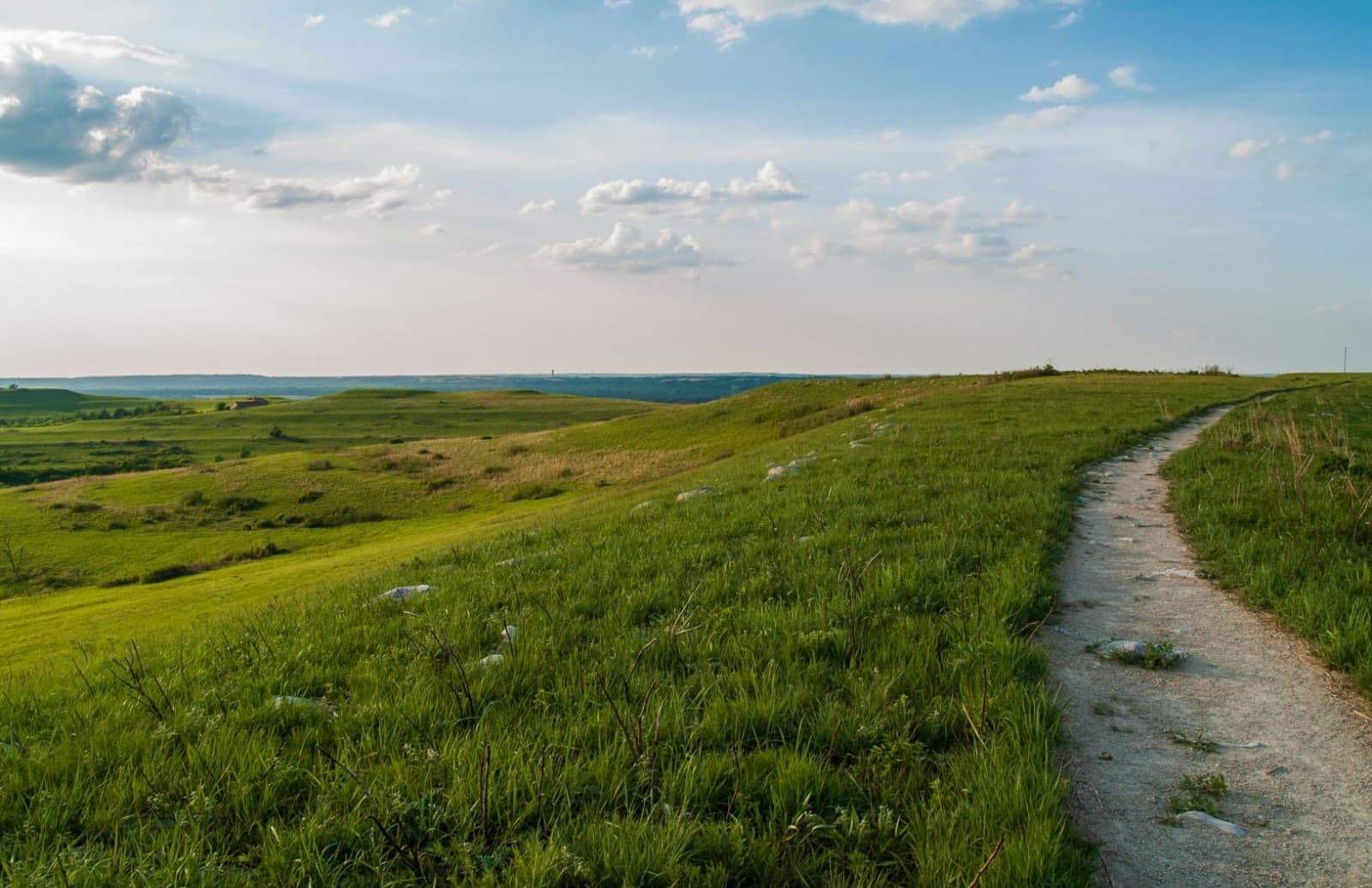
The Kansas Flint Hills are relatively quiet and understated. The relevant market is the ranchland and prairie communities around Chase, Morris, and Wabaunsee counties, including Cottonwood Falls, Strong City, Council Grove, Alta Vista, and rural areas farther from the larger college-town and metro anchors.
This is a thin, highly specific market. In early May, LandWatch showed limited farms and ranches for sale in Chase County, while Morris County showed a few rural properties, ranches, and hunting land for sale. Wabaunsee County also showed rural property and hunting-land inventory, though the market remains smaller and less conventional than lake- or resort-driven acreage areas.
For buyers, the Flint Hills are less about conventional luxury markers and more about scale, views, and land character. The National Park Service notes that less than 4% of North America’s tallgrass prairie remains intact, mostly in the Kansas Flint Hills. Acreage here appeals to buyers drawn to ranching, equestrian use, conservation-minded ownership, and a quieter version of luxury built around open land.


4. The Des Moines River Valley, Iowa
In Iowa, the Des Moines River Valley offers acreage markets tied to river scenery, farmland, timber, and access to established communities. The strongest pockets sit outside the Des Moines core, especially around Indianola, Winterset, Boone, Madrid, Ogden, Adel, and the rural parts of Warren, Madison, Boone, and Dallas counties.
The current land scene is active by Iowa standards. Warren County had nearly 200 land listings on LandWatch in early May, with examples in the 51- to 100-acre range, while Madison County listings included farms, ranches, recreational land, hunting land, horse property, and homesites. Boone County also had rural land inventory, giving buyers additional options north of the Des Moines metro.
The river-valley setting helps distinguish this part of Iowa from flatter farmland markets. Boone County’s portion of the Des Moines River is designated as a state water trail, with approximately 38 river miles and eight boat ramps, supporting canoeing, kayaking, boating, fishing, wildlife viewing, and recreation. For buyers, the appeal is usable land within reach of towns, services, and metro access.
5. The Nebraska Sandhills
The Nebraska Sandhills are the most land-intensive region on this list. The relevant markets include Valentine, Hyannis, Mullen, Thedford, Cherry County, Grant County, and ranchland near the Niobrara River. It’s a ranch, recreational, conservation, and large-tract land market.
The scale is what sets the region apart. The Sandhills are an expansive grass-covered sand dune formation covered by grasses in north-central Nebraska, with over one million acres of wetlands scattered throughout the region. Cherry County ranks eighth among Nebraska counties for total acres of rural property and land listed for sale on LandWatch based on recent data, while Grant County has recent Sandhills ranch inventory measured in the thousands of acres, including a 7,225-acre ranch near Hyannis.
Properties here are often better understood as legacy holdings than traditional second homes. The market is remote and specialized, but for buyers seeking substantial acreage, that remoteness is the point.