Framing the Cost Divide
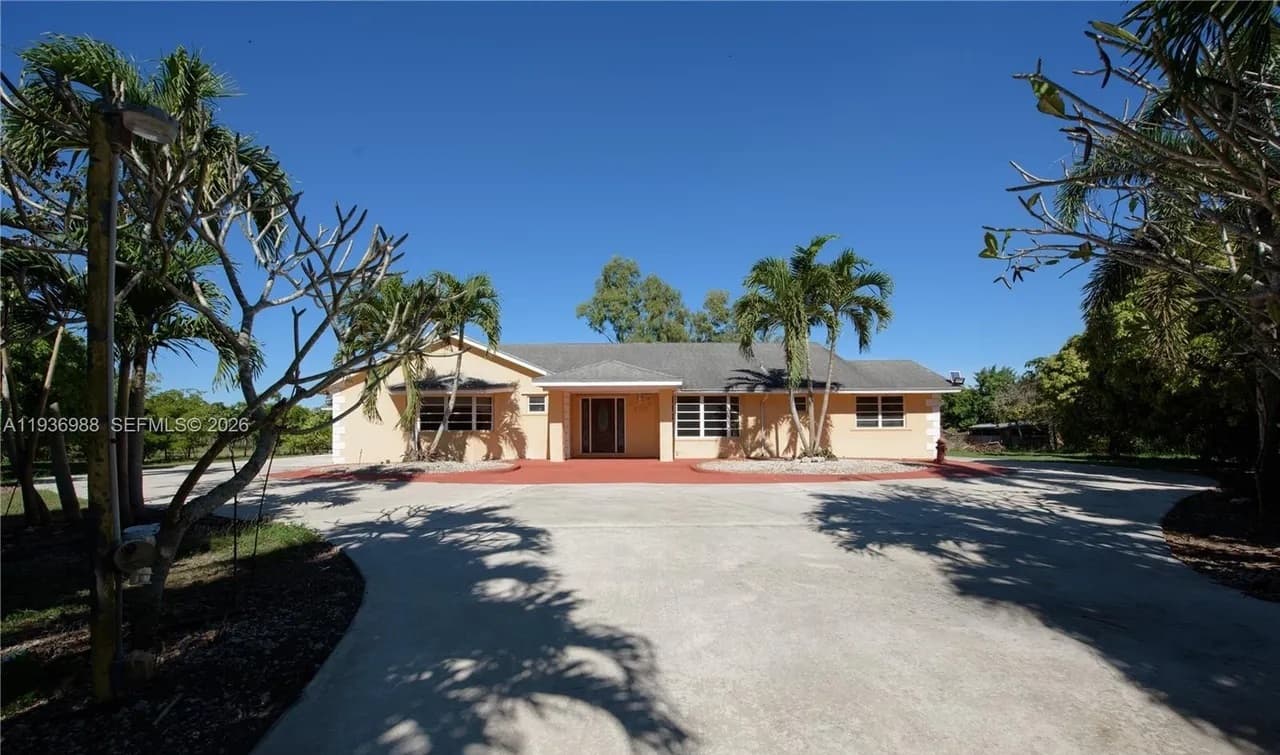
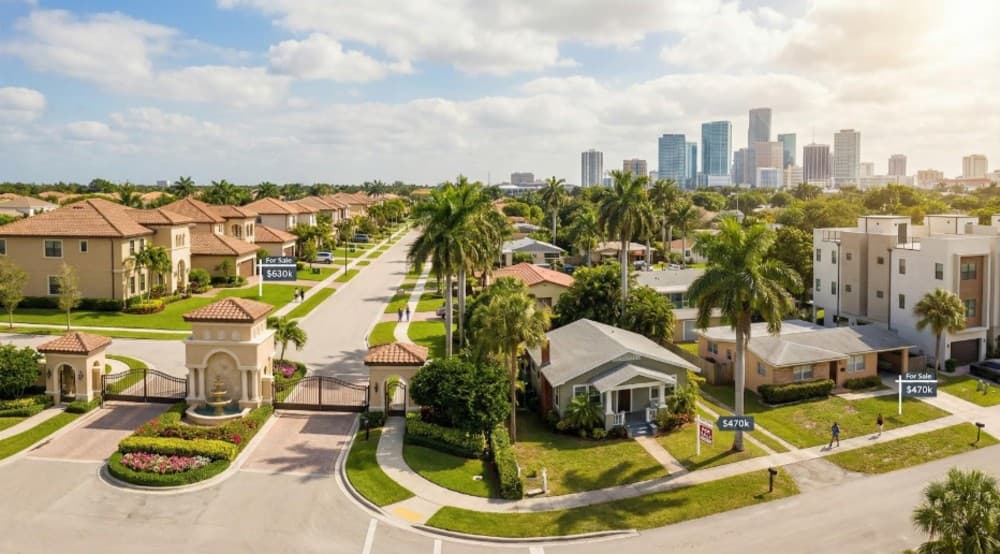
Sunshine lures many of us to South Florida, but housing costs decide the ZIP code. In December 2025, the typical Boca Raton home sold for $630,000, versus $470,000 in West Palm Beach—a $160,000 spread that reshapes down payments and monthly budgets. Boca’s “A-rated” schools and manicured, land-locked neighborhoods fuel its premium; West Palm’s eclectic downtown and larger lots keep prices in check. In this guide, we’ll compare prices, taxes, insurance, and lifestyle so you can decide which city fits your wallet. Curious? Explore current Boca listings if you’d like a sneak peek.
SUBSCRIBE TO THE HAVEN MAILING LIST
Curated homes, market intelligence and design stories — a few emails a month.
No spam. Unsubscribe any time.
Housing Market Snapshot
Median Prices and Cost per Square Foot
Picture two open-house flyers side by side. Boca asks $630,000 for a three-bed, while West Palm invites offers around $470,000. According to Redfin closing data for December 2025, that $160,000 difference has persisted for several months.
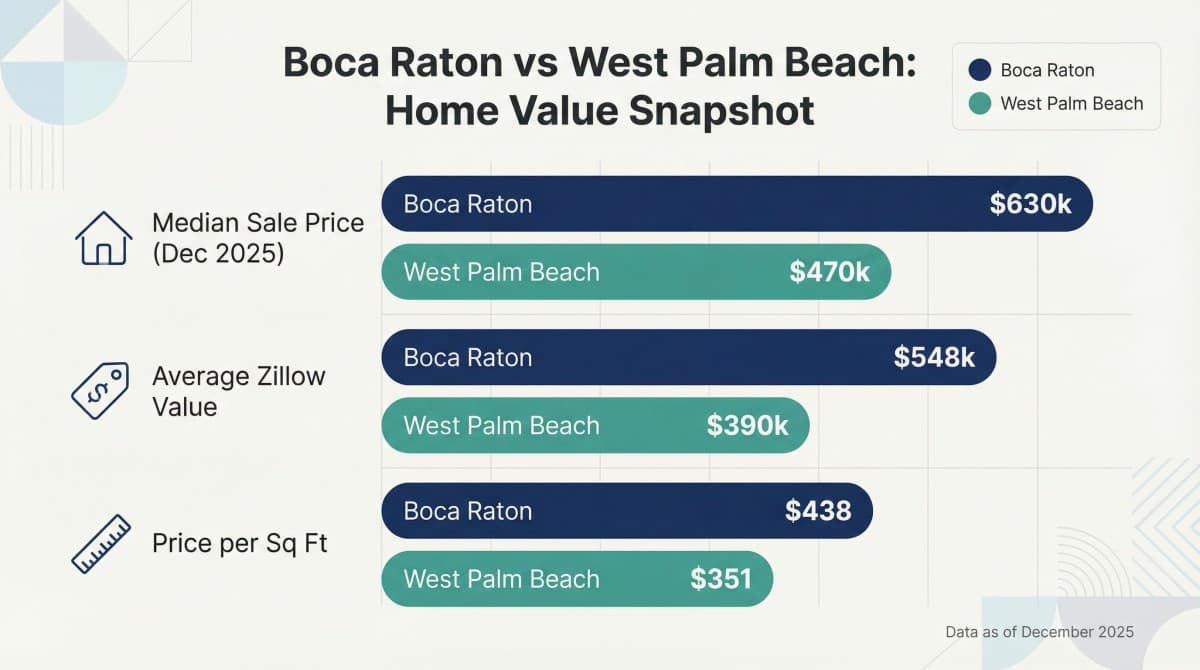
Numbers sharpen the view:
Metric Boca Raton West Palm Beach Median sale price (Dec 2025) $630,000 $470,000 Average Zillow value $548,000 $390,000 Price per square foot $438 $351
Boca commands a 30- to 40-percent premium across every yardstick. The higher cost per foot shows buyers are paying extra for refined neighborhoods, strong schools, and the well-known Boca brand.
A $500,000 budget buys about 1,400 square feet in Boca; the same money stretches to roughly 1,700 square feet in West Palm. More space on the same mortgage makes West Palm attractive to growing families or remote workers who need a dedicated office.
Demand explains part of the spread. Boca’s gated communities, waterfront lots, and strict design codes create scarcity, while West Palm’s broader mix—from 1920s bungalows to downtown high-rise condos—keeps entry points open and pulls the average down.
Five-Year Appreciation and Market Cycles
Rewind to 2018: a typical Boca home sold near $350,000, and West Palm hovered in the mid-$200,000s. Pandemic migration lifted both. By 2023 Boca’s median reached about $600,000, nearly doubling its pre-COVID level, while West Palm climbed to $470,000, a 65-percent gain.
Rising mortgage rates in 2023 slowed momentum. Boca’s median slipped 1.2 percent year over year, yet West Palm still posted a 4.4-percent gain. The pattern suggests West Palm’s mid-price segment stays resilient when luxury buyers pause, whereas Boca’s top tier reacts more to rate shifts.
Listings remain well below historic norms, and new construction cannot close the gap. Prices have flattened rather than fallen, giving both markets a sturdy floor and signaling that each city will likely stay in demand, even if interest rates stay elevated.
Buyer or Seller: Who Holds the Cards
Bidding wars have cooled since the May 2022 peak. As of January 2026, the average home spends 85 days on market in West Palm Beach and 103 days in Boca Raton, versus fewer than 30 days in 2022.
The shift brings balance. Inventory remains tight, so sellers still command fair prices, yet they price closer to reality and welcome inspections. Buyers, meanwhile, gain time to negotiate repairs or request closing credits.
Months of supply tell the same story. West Palm sits near 3.0 months, a level analysts call balanced, while Boca edges a bit higher because ultra-luxury listings linger longer. Cash still carries weight, but financed buyers finally compete.
In short, neither city is a bargain sale or a bidding circus. Arrive pre-approved, know your ceiling, and act promptly, and you can land a home without giving up every concession.
Overall Cost-Of-Living Index
Sticker price covers only part of the story, so let’s zoom out to daily expenses. According to BestPlaces’ 2025 cost-of-living data, both Boca Raton and West Palm Beach carry a composite score of 114, roughly fourteen percent above the U.S. average. Groceries, gas, and doctors’ visits total nearly the same whether you live near Mizner Park or Clematis Street.
Housing is the standout expense. BestPlaces lists a housing index of 164 for Boca versus 118 for West Palm. That 46-point gap explains why a mortgage stretches further up the coast even though your Publix bill does not. Everything else—utility rates from Florida Power & Light, price per gallon at the pump, and that morning latte—lands within a few dollars.
Bottom line: beyond the mortgage or rent, everyday costs feel like copy and paste between the two cities. Your bank account notices the ZIP-code premium only when you close on the house.
Property Taxes
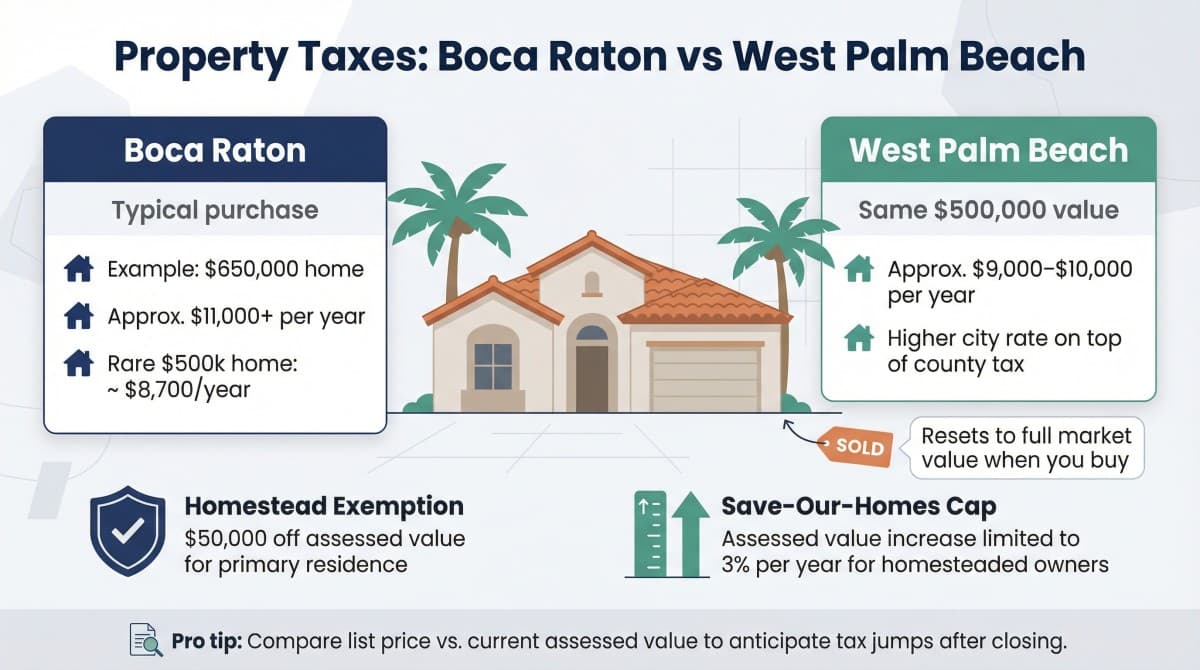
Sticker shock often begins with the tax bill. Using Palm Beach County’s 2025 millage schedule, a West Palm Beach buyer who closes on a $500,000 primary home pays about $9,000 to $10,000 per year, because the city layers a higher municipal rate on top of the county levy.
Boca Raton’s city rate is lower, yet larger home values narrow the gap. If you found a $500,000 house inside Boca limits (uncommon, but possible), the annual tax lands near $8,700. Upgrade to Boca’s more typical $650,000 purchase, and the invoice climbs past $11,000.
Florida’s Homestead Exemption and the Save-Our-Homes cap limit assessed increases to three percent a year for existing owners. That is why a neighbor who bought in 2012 may boast of a sub-$4,000 bill on a house now worth far more. When a property changes hands, the assessment resets to market value, so budget for the full amount unless you plan to port an existing homestead.
Before you pencil those numbers into a budget, take sixty seconds to browse the latest homes for sale in Boca Raton on SquareFoot Homes; the live feed displays hundreds of active listings sorted by neighborhoods like Royal Palm Yacht & Country Club, Boca Isles, and Mission Bay.
SquareFoot Homes’ step-by-step Homestead Exemption guide links directly to Palm Beach County’s online e-file portal and explains that a first-time filing covers every future year, because renewals arrive automatically each January.
The walkthrough helps new owners avoid missing the deadline—and the $50,000 exemption that can trim hundreds off the first tax bill.
Pro tip: before writing an offer, pull the parcel’s assessed value from the county appraiser. Compare it with the list price. The wider the gap, the larger the post-closing tax jump. A five-minute check can save thousands each year.
Homeowners Insurance
Insurance is the wildcard in every Florida budget. As of 2025, the average statewide premium is about $5,700 per year, more than double the national figure.
Location offers little relief. Boca Raton and West Palm Beach sit on the same hurricane map, so base rates start at similar levels. Boca’s higher home values push replacement-cost calculations upward, raising premiums to roughly $8,000 on a $650,000 house. West Palm’s older housing stock brings different risks: if the roof is 15 years old or the windows lack impact glass, carriers add surcharges or decline coverage until upgrades are complete.
Legislative changes in 2024 trimmed lawsuit volume and enticed a few private insurers back into the market, yet pricing stays volatile. When comparing policies, request quotes during the inspection window, confirm the roof’s age, and ask the seller for the current declarations page. Five minutes of diligence can save hundreds each month.
Utilities, HOA Fees, and Everyday Extras
Electric bills track closely in both cities. Florida Power & Light reports that a three-bedroom home averages $130 to $150 per month, rising toward $250 during peak summer use in 2025. Water, sewer, and trash add another $60 to $90, slightly higher inside West Palm Beach’s older municipal grid but not enough to shift a budget on their own.
HOA dues create the real divide. Boca’s gated and club communities often charge $300 to $800 per month, and select golf neighborhoods layer a one-time initiation near $30,000. West Palm Beach still hosts numerous associations, especially in newer western suburbs, yet many historic in-town blocks carry no HOA at all. Those savings can fund upgrades or cushion insurance costs.
Everyday spending feels interchangeable. You will see the same Publix BOGO deals, the same gas station prices, and the same cold brew at Starbucks. Commutes rely on cars in both cities, although Brightline and Tri-Rail connect the downtowns for rail-based trips. In short, fixed housing expenses build the gap; everything else rides side by side on the same South Florida receipt.
Community Demographics and Income Profile
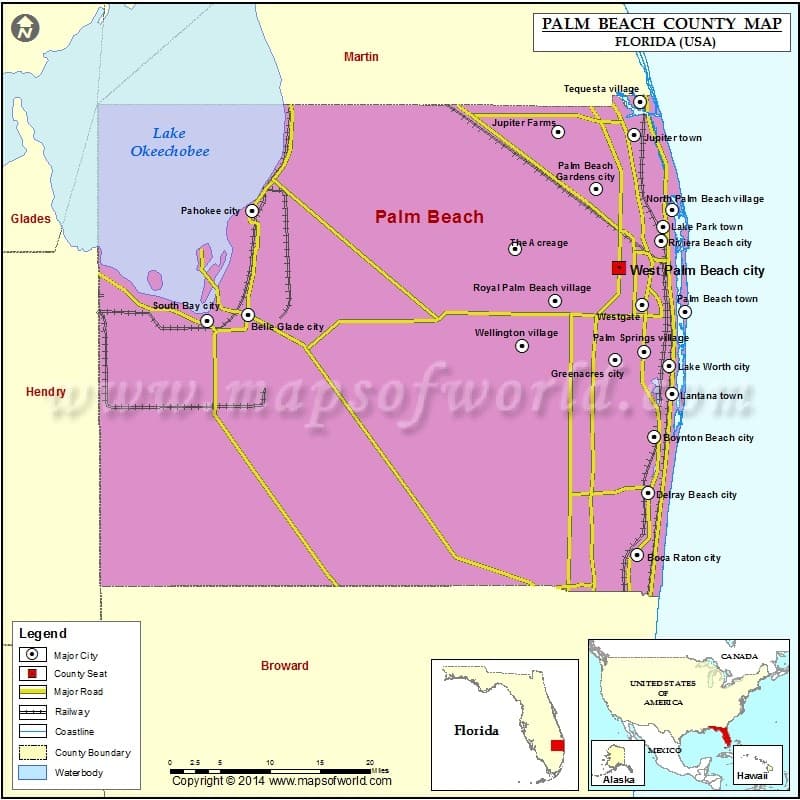
Palm Beach County map highlighting Boca Raton and West Palm Beach demographics
Numbers draw a sharp contrast. Boca Raton counts 98,000 residents and a median household income just over $100,000. About 75 percent of adults hold a bachelor’s degree or higher, and the poverty rate stays below 10 percent. Retirees and established professionals dominate, many bringing Northeast paychecks to the South Florida sun. The atmosphere feels orderly, predictable, and quietly affluent.
Drive north on Dixie Highway and the tone shifts. West Palm Beach hosts 120,000 residents with a median income near $70,000. The population skews younger, cultural variety widens, and the economic range stretches from fintech analysts in new glass towers to blue-collar families rooted for generations. Poverty rates roughly double Boca’s, yet entrepreneurial energy rises with food halls, craft breweries, and co-working hubs filling renovated warehouses downtown.
Why does this matter for housing? Higher incomes in Boca fuel demand for larger homes and keep prices firm even during slower cycles. West Palm’s broader income spread translates to a wider menu of property types and price points, from restored 1920s cottages to sleek high-rise condos.
Population growth remains steady in both cities at roughly 1 percent per year. Land availability tells the rest of the story. Boca is nearly built out, so newcomers funnel into infill condos or western-suburb enclaves. West Palm still pushes west, adding single-family tracts and mid-rise apartments that absorb, or at least redistribute, demand.
Housing Stock and Neighborhood Character
Boca Raton feels purpose-built. Master-planned communities line the west side, each marked by fountains, palm trees, and a friendly security kiosk. Houses trend newer—mostly built from the 1980s onward—with Spanish-Mediterranean roofs, three-car garages, and generous lots. Many subdivisions add clubhouses, tennis centers, and golf courses, which helps explain the higher HOA dues. East Boca tightens the grid but keeps its polish: waterfront estates along the Intracoastal and high-rise condos near Mizner Park deliver million-dollar views, even when the list price climbs higher.
West Palm Beach delivers variety on a single block. Near downtown, 1920s Mission-style cottages sit next to mid-century ranches and brand-new townhomes. Walk a few streets and you reach condo towers overlooking the lagoon, magnets for young professionals and empty nesters who prefer rooftop pools to lawn care. Farther west of I-95, the city stretches into suburban tracts still adding construction where land allows. HOA rules exist, yet pockets without them remain popular among buyers who value freedom over uniform hedges.
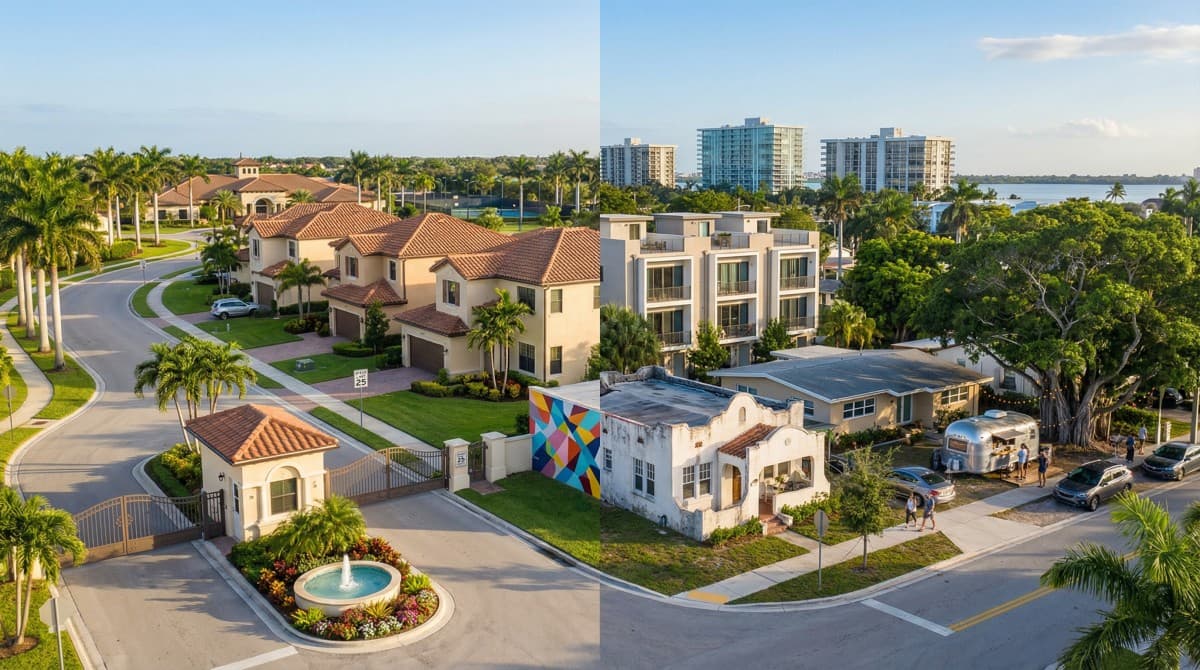
Character follows form. Boca’s neighborhoods project quiet order—perfect lawns, consistent paint palettes, speed limits enforced by polite waves from security. West Palm hums with urban texture: murals on warehouse walls, music drifting from waterfront festivals, and a coffee trailer parked under banyan trees. Because that energy can change block to block, smart shoppers visit the area at night and during rush hour before submitting an offer.
In simple terms, Boca sells consistency; West Palm sells choice. Your tolerance for HOA bylaws, appetite for architectural quirk, and desire for nightlife will guide your decision.
Schools and Family-Friendliness
Ask a Palm Beach County parent why they stretched for Boca Raton and you hear one word: schools. Boca Raton High, Spanish River High, and a network of “A”-rated elementary and middle campuses serve nearly every neighborhood, so families buy with confidence rather than zoning gymnastics. After the bell, kids head to city parks, year-round sports leagues, or STEM camps at Florida Atlantic University. Safe streets and a steady suburban rhythm complete the package, and homes in top Boca school zones rarely linger, even during slower cycles.
West Palm’s report card is mixed. The district hosts two of Florida’s marquee magnet programs, Suncoast and Dreyfoos, but admission requires an application and sometimes a lottery. Zoned high schools range from solid to struggling, so family shoppers research boundaries block by block. Many choose charters or private options if they fall outside preferred zones. The upside is choice; the downside is homework before house-hunting.
Parks and play space help level the field. West Palm offers the Palm Beach Zoo, Cox Science Center, and the 1,700-acre Okeeheelee Park, while Boca counters with Sugar Sand Park’s science playground and miles of beachfront picnic areas. Both cities keep kids outside year-round; the difference is whether you want sand between their toes or zoo walks under banyan shade.
If your top priority is a seamless public-school path, Boca’s premium delivers. If your family thrives on urban energy and you are ready to navigate magnet applications—or budget for private tuition—West Palm opens that door at a lower entry price.
Amenities, Culture, and the Outdoor Lifestyle
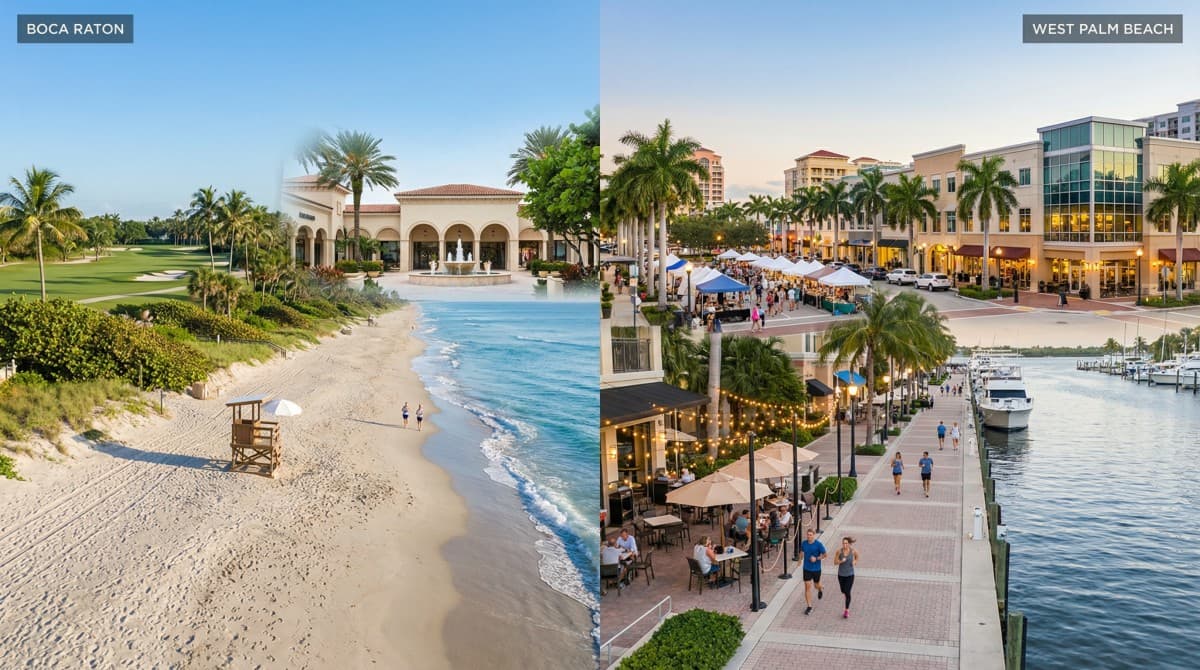
Boca Raton puts the Atlantic in your backyard. Two miles of protected city beach stretch from Spanish River Park to South Inlet, buffered by sea-grape dunes and free parking decals for residents. Sunrise joggers claim the sand, then golfers tee off on a dozen nearby courses before lunch. Even errands feel upscale: Town Center mall hosts luxury brands, while Mizner Park blends boutiques, a museum, and an amphitheater along a palm-lined promenade.
West Palm Beach swaps ocean frontage for downtown energy. Flagler Drive hugs the Intracoastal, a waterfront promenade animated by joggers, art festivals, and the internationally known boat show each March. Cross Clematis Street and you step into a grid of cafés, breweries, and tech start-ups that keep sidewalks busy late into the night. The Square—formerly CityPlace—adds open-air shopping and a Saturday green market full of live music and fresh produce.
Outdoor choices link both cities. Boca’s El Rio Trail draws cyclists under oak canopies, while West Palm’s Grassy Waters Preserve offers boardwalk hikes through Everglades marsh. Boaters from either city meet at Lake Boca on Saturday, then anchor off Peanut Island for Sunday snorkeling. Brightline’s high-speed rail connects the two downtowns in 15 minutes, helpful when Boca residents seek West Palm’s SunFest or West Palm foodies book an omakase counter in Boca.
Nightlife underscores the personality split. Boca favors early reservations, valet parking, and polished wine bars. West Palm leans louder—rooftop tacos, jazz clubs, and speakeasies hidden behind bookcases. Choose your soundtrack, then catch a ride home.
Whichever ZIP code you choose, 75-degree winters, boat days, and palm silhouettes come standard. The difference lies in whether you prefer the ocean at your doorstep or a skyline outside your condo window.
Market Outlook and Expert Insights
South Florida continues to attract new residents. Remote tech staff from San Francisco, hedge-fund analysts from Manhattan, and retirees trading snow for sunshine add to Palm Beach County’s population every month. Limited land and slow construction keep inventories tight, so prices hold steady even in a high-rate world.
Mortgage rates near seven percent have cooled the frenzy without freezing it. Cash still dominates Boca’s luxury tier, softening the impact of financing costs. West Palm Beach, with more mortgage-dependent buyers, saw activity pause in late 2024, yet listings remained scarce, preventing sharp declines. Local brokers quoted by the Realtors of the Palm Beaches and Greater Fort Lauderdale forecast a two to four percent median-price increase for both cities in 2026 if rates stay flat, and a faster rise if borrowing costs fall.
Employment trends support the outlook. Citadel, Goldman Sachs, and a string of fintech spinoffs keep leasing space along Flagler Drive, while Boca hosts corporate headquarters and a pipeline of medical and tech roles linked to Florida Atlantic University’s research park. Diverse job bases cushion both cities against single-sector shocks.
Insurance remains the wild card. If 2024 legislative tweaks continue to reduce litigation and attract new carriers, premiums could stabilize, freeing buyer budgets and nudging prices upward. A major storm season or renewed insurer exit would cut the other way, especially for older West Palm roofs and Boca waterfront estates.
Bottom line: Look for a balanced market rather than a bargain bin. Inventory stays lean, demand stays real, and Florida’s tax advantage keeps I-95 busy. Buyers who act when rates dip and choose homes with updated roofs and solid wind mitigation stand to gain lower monthly costs now and healthy equity growth later.
Choosing Your Ideal Location
You now know the trade-offs. Boca Raton shines with top-tier schools, manicured neighborhoods, and walkable beaches, wrapped in a higher purchase price and steeper ongoing costs. West Palm Beach counters with lower home prices, a lively downtown, and architectural variety, although buyers must vet school zones and embrace more urban energy.
Start by ranking non-negotiables. If “A”-rated public schools and a gated golf community top the list, Boca earns its premium. If a larger yard, walkable nightlife, and budget room for renovations matter most, West Palm answers.
Either way, taxes and insurance headline the monthly spend, so run those figures before focusing on stucco color. Tour listings in both cities to see how far your budget stretches—you can browse Boca options now to ground the comparison.
Sunshine, no state income tax, and year-round outdoor living come standard with both ZIP codes. The best fit simply matches your lifestyle without stretching your wallet.
Key Takeaways
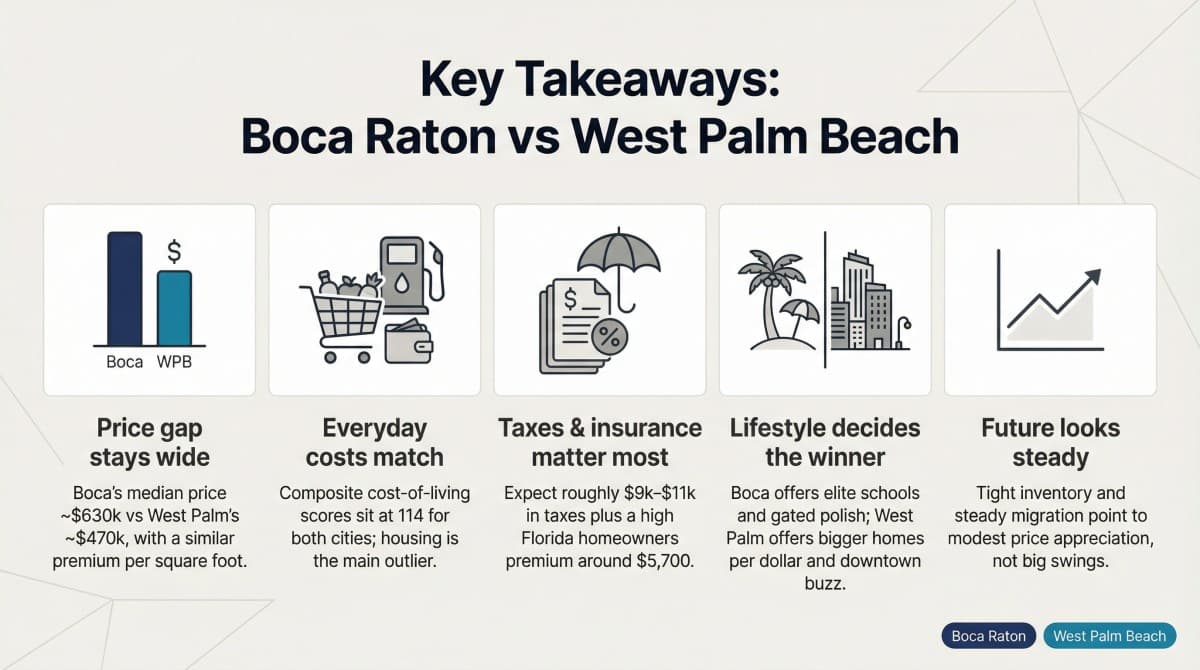
- Price gap stays wide. Boca’s median sale price is $630,000, about 40 percent above West Palm’s $470,000, and the same premium shows in price per square foot.
- Everyday costs match. Composite cost-of-living scores sit at 114 for both cities; housing is the only major outlier.
- Taxes and insurance drive the budget. Expect $9,000 to $11,000 in annual property taxes and a statewide average homeowner premium near $5,700.
- Lifestyle decides the winner. Boca offers elite schools and gated polish; West Palm provides bigger homes per dollar and downtown buzz.
- Future looks steady. Tight inventory, steady migration, and diverse job growth point to modest price appreciation rather than sharp swings.